
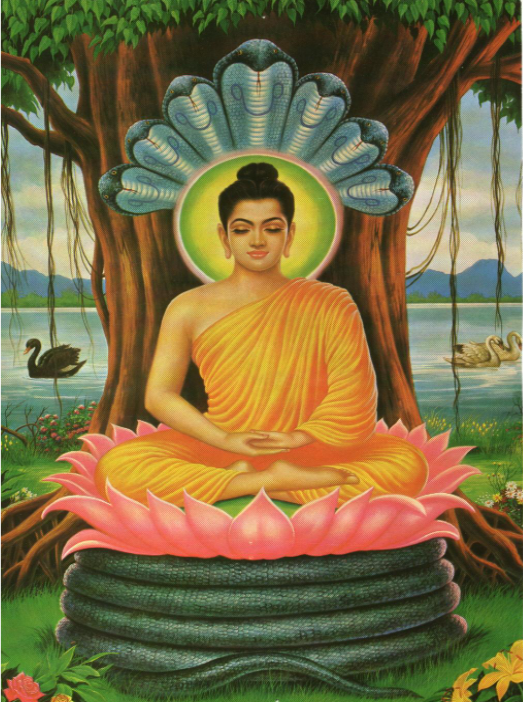
The Legend of Buddha
According to the myth, on the Chinese New Year Buddha convened the animal kingdom to determine how to restore order in the world; however, only 12 animals showed up. Thus the 12 animals came to represent the Chinese zodiac cycle, each presiding over one year. The order of the 12 signs was determined by Buddha at the celebration based on the chronology of the animals’ arrival to the meeting: the first was the rat, followed by the ox, tiger, rabbit, dragon, snake, horse, sheep, monkey, rooster, dog and pig successively.
Based on this order of arrival, Buddha gave each animal a year of its own, bestowing the nature and characteristics of each animal on people born on the corresponding year.
Lunar Cycles
The Chinese believe that the four phases of the moon, like the four seasons that make up the year, have their own special functions and significance.
Chinese doctors and herbalists have always been aware of the body’s own clock and have prescribed herbs and treatment to be taken at specific times. They went even further by scheduling medical treatment according to the moon’s phases. Surgery of any kind (including tooth extractions) was usually done after the full moon, preferably during the last quarter, as bleeding would be considerably less and the wound would heal faster if the moon was in decline. Cutting one’s hair was recommended during the first phase of the moon as it would promote further hair growth in somewhat the same way that pruning branches encourages a tree’s renewal. Medications used to regulate a woman’s menstrual cycle also had to be taken after the full moon and in the evenings to get the best results. Farmers, too, relied on the moon phases, to plan the planting and harvesting times of theis crops.
Dr. Kristina Neuhauser
Ph.D. Phil.
Master Chue Style Feng Shui
Professional Feng Shui Consultant
Registered Teacher Chue Foundation
F S S UK Registered Member
Professional Space Clearing
